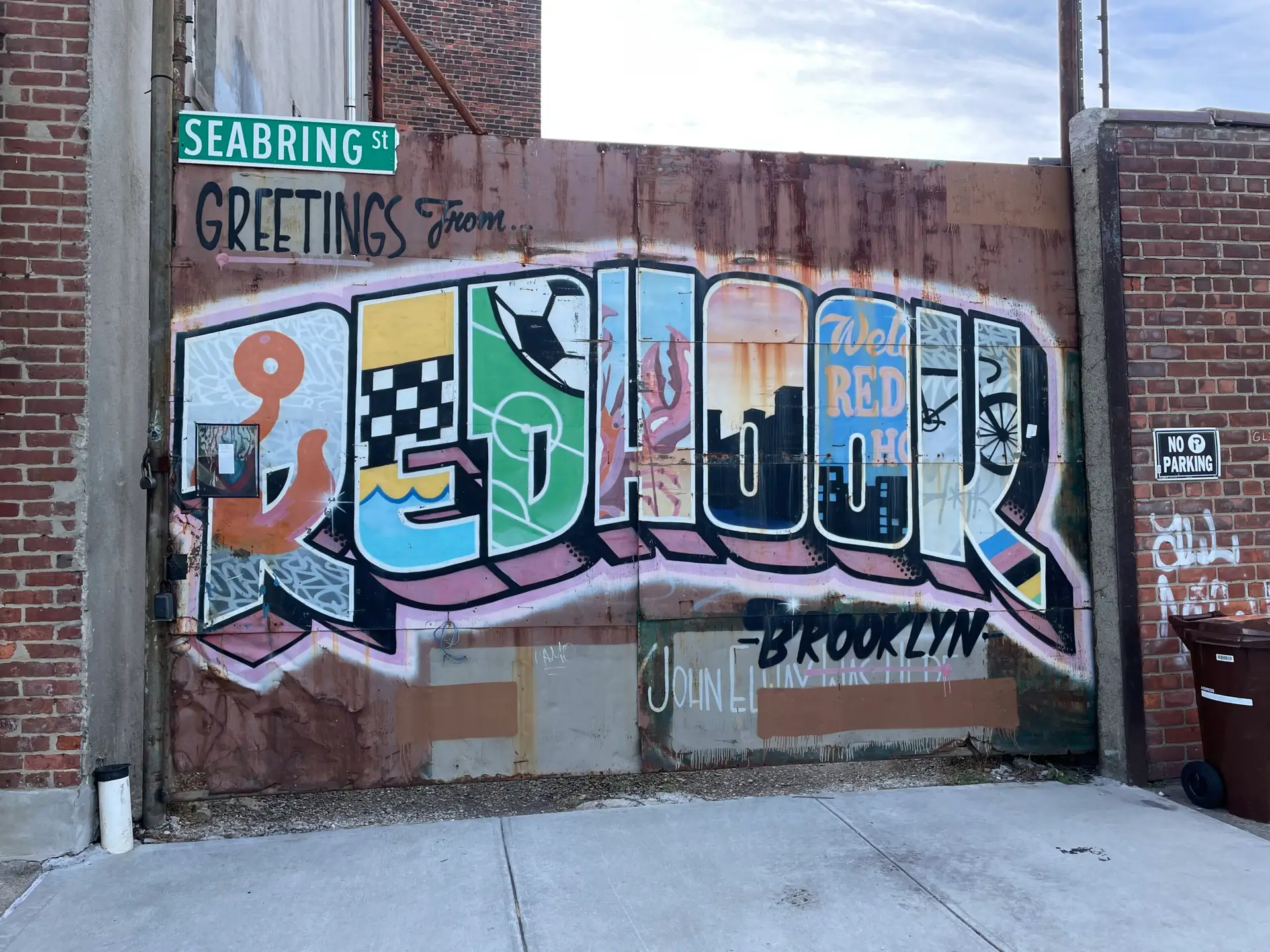
Red Hook is located on a peninsula in southwestern Brooklyn and is known for its diverse community, rich history, and unique geography. It’s one of the only places in Brooklyn with a clear view of the Statue of Liberty. In fact, Red Hook offers the only frontal views of the Statue of Liberty in NYC. From various points in Red Hook, visitors have access to the only front-facing views of the Statue of Liberty in New York City. In fact, it’s our favorite view of lady liberty, and that’s saying a lot as a NYer!
The neighborhood is bordered by the Upper New York Bay to the south and west, and by the Gowanus Canal to the east.
Check out these two places to view the Statue of Liberty in Red Hook:

On Your Own
A true hidden gem, not easily found on a map, Pier 44 Waterfront Garden is one of the best ways to view the Statue of Liberty. The park is also home to the incredibly unique Waterfront Museum, which is housed on a 1914 barge.
With expert local guides!
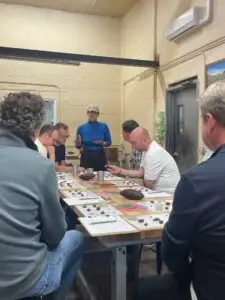
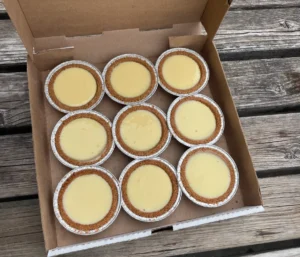
For an easier option, join us on our Red Hook Boozy Foodie Tour. We take you to nearby Steve’s Authentic Key Lime Pies and the Red Hook Winery, both near the park with excellent views and delicious and fun stops as well!
What was once a waterfront shipping yard, is now home to the beautiful Louis Valentino, Jr. Park and Pier. Named after a neighborhood firefighter and lifeguard, the park offers a unique view of Lady Liberty as you can see it straight on, rather than from the side (like with most other locations). Along with the Statue of Liberty, you can see Governors Island, the Manhattan Skyline, and Staten Island.
Red Hook is unique for several reasons:
The history of Red Hook, Brooklyn dates back to the 1600s when it was an important shipping and transportation center. During the 19th century, Red Hook was a major port and was known for its thriving commercial and industrial activity. It was a center of shipbuilding, and was also an important hub for trade, including the export of goods like coffee, sugar, and molasses.
In the late 19th and early 20th centuries, Red Hook became a major center of immigration, attracting large numbers of Irish, Italian, and Scandinavian immigrants. These communities brought a rich cultural heritage to the neighborhood and helped to shape its character.
During the mid-20th century, Red Hook experienced a period of decline, as shipping and industry moved elsewhere and the neighborhood suffered from economic hardship and crime. However, in recent years, Red Hook has undergone a resurgence, with a growing arts and culture scene, and a renewed focus on community development and revitalization.
Today, Red Hook is a vibrant and diverse neighborhood, known for its rich history, unique geography, and cultural heritage.
The origin of the name “Red Hook” is not certain, but there are several theories about its origins. One theory is that the name comes from the red clay soil in the area, which was used by early Dutch settlers to make bricks. Another theory is that the name refers to the red color of the land when viewed from the water, due to the high iron content of the soil.
A third theory is that the name is derived from the Dutch word “rood hoek,” which means “red point” or “red corner.” This theory suggests that the name refers to the red clay cliffs that once surrounded the area and that the cliffs were used as a navigational aid for ships entering the harbor.
Regardless of its origin, the name “Red Hook” has been associated with the neighborhood for centuries, and has become a symbol of its unique history and character.

Hurricane Sandy, which struck the New York City area in 2012, had a significant impact on Red Hook, Brooklyn. The neighborhood is located on a low-lying peninsula and is surrounded by water on three sides, making it vulnerable to flooding and storm surges.
During Hurricane Sandy, Red Hook experienced significant flooding, with many homes and businesses being inundated with water. The neighborhood was without power for several days, and many residents were forced to evacuate. The flooding caused significant damage to the infrastructure, including roads, bridges, and the electrical grid.
In the aftermath of Hurricane Sandy, Red Hook has been working to recover and rebuild. The community has been working to improve its resilience to future storms, with measures like flood walls, elevated parkland, and improved drainage systems. Red Hook has also been the recipient of significant funding from the government and non-profit organizations to help support its recovery efforts. Today, the neighborhood is working to regain its footing, with a growing arts and cultural scene, and a renewed focus on community development and revitalization.
How to Get to Red Hook
Part of Red Hook’s hidden-gem charm is that it’s one of the only neighborhoods in New York City without a subway stop — which just means the journey is half the fun. Here’s how to get there:
- NYC Ferry (South Brooklyn route): Hop off at the Red Hook/Atlantic Basin landing. The route links Red Hook with Wall Street/Pier 11, DUMBO and Atlantic Avenue, Governors Island, and — on weekends — Sunset Park and Bay Ridge. It’s just $4.00 a ride, with unbeatable harbor views along the way.
- The free IKEA ferry: IKEA runs a free passenger ferry between Pier 11 (Wall Street) in Manhattan and its Red Hook store — an easy, no-cost way to arrive by water.
- By bus: The B61 bus runs right into the heart of the neighborhood.
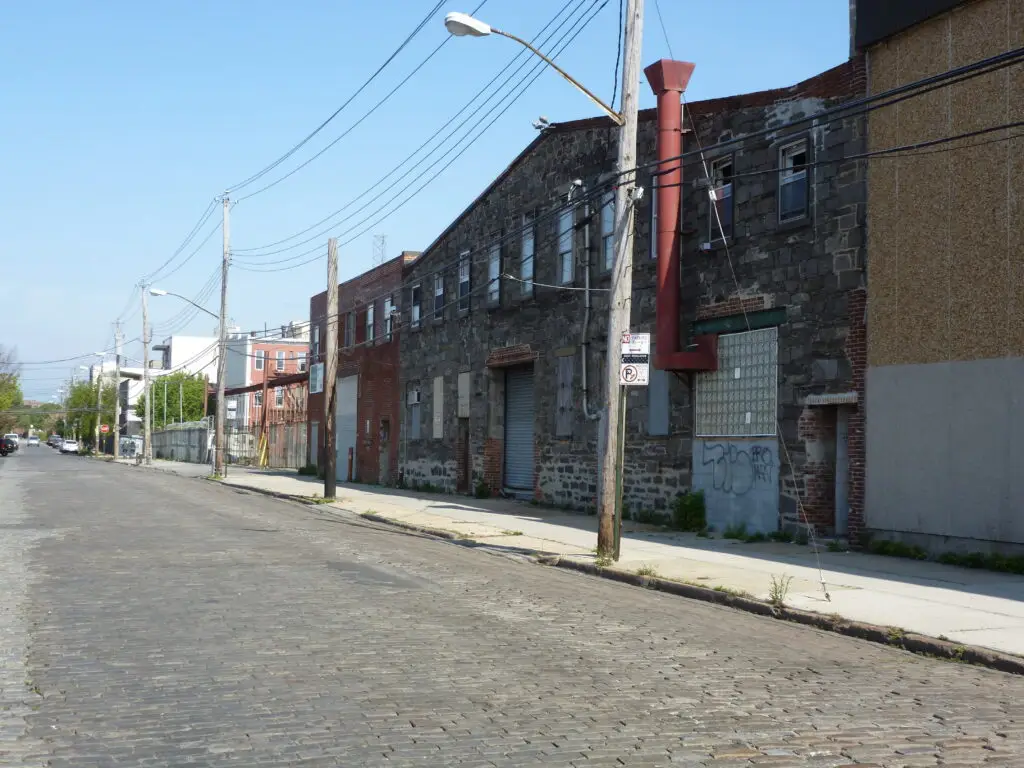
- On foot or by car: Red Hook is flat and walkable, with those famous Belgian-block cobblestone streets underfoot.
What Red Hook Is Known For: Food, Drink & Culture
For such a small neighborhood, Red Hook punches well above its weight when it comes to food, drink, and culture. A few local favorites worth the trip:
- Hometown Bar-B-Que — widely considered some of the best barbecue in New York City.
- Steve’s Authentic Key Lime Pie — a beloved waterfront institution at the end of Van Dyke Street.
- Red Hook Winery — a working winery on the Pier 41 waterfront, crafting wine from New York State grapes.
- Raaka Chocolate — a bean-to-bar chocolate factory offering tastings and tours.
- Defonte’s — an old-school Italian sandwich shop serving Red Hook since 1922.
- Sunny’s Bar — a historic, character-packed waterfront bar known for live music and bluegrass jams.
- Pioneer Works — a soaring arts-and-science center with free exhibitions, performances, and events.
Many of these are stops on our Red Hook food and culture tour, with a local guide to share the stories behind them.
Red Hook, Brooklyn FAQ
How do you get to Red Hook without a subway?
Red Hook has no subway stop. The easiest ways in are the NYC Ferry South Brooklyn route (to the Red Hook/Atlantic Basin landing, $4 a ride), the free IKEA ferry from Pier 11/Wall Street, or the B61 bus.
What is Red Hook known for?
Red Hook is known for its cobblestone streets, working waterfront, and the only frontal views of the Statue of Liberty in NYC — plus a standout food-and-drink scene, from Hometown Bar-B-Que to Steve’s Key Lime Pie and Red Hook Winery.
What are the best things to eat in Red Hook?
Don’t miss the barbecue at Hometown Bar-B-Que, a slice of key lime pie from Steve’s Authentic, an Italian sandwich from Defonte’s, bean-to-bar chocolate from Raaka, and a glass of local wine at Red Hook Winery.
Is Red Hook worth visiting?
Absolutely. Red Hook rewards the effort it takes to get there with waterfront views, rich maritime history, independent shops and makers, and some of Brooklyn’s best food — all without the crowds of more central neighborhoods.
Want to experience an inside look in Red Hook?
Join us on our Red Hook Neighborhood Behind The Scenes Tour to see and taste your way through the neighborhood (amazing stops including wine, whiskey, BBQ & more!)
Claim your spot